

Using Natural Cleaning Products for a Chemical-Free Home
Why Natural Cleaning Makes Sense
There is something deeply satisfying about cleaning your home with ingredients you can pronounce — and often eat. White vinegar, bicarbonate of soda and citrus peels are the holy trinity of a chemical-free home. They cut through grease, banish limescale, neutralise odours and leave your kitchen, bathroom and living spaces feeling genuinely fresh, not merely perfumed. Best of all, they cost pennies compared to supermarket sprays, and they do not release the harsh fumes that can irritate eyes, lungs and skin. For anyone who loves a sustainable home and a gentler footprint, these cupboard heroes are a brilliant place to start.
The Three Hero Ingredients
Before you begin mixing, it helps to know what each ingredient does. Together they cover almost every cleaning job in a typical UK home.
- White vinegar — a mild acid that dissolves limescale, soap scum and grease. It also deodorises and inhibits mould. Use the clear, distilled kind, not malt vinegar.
- Bicarbonate of soda (bicarb) — a gentle abrasive that lifts burnt-on food and stains. It also neutralises acidic smells, making it perfect for fridges, bins and carpets.
- Citrus peels — lemon, orange and lime peels contain limonene, a natural solvent that cuts grease and leaves a bright, clean scent. Steep them in vinegar to make a wonderfully effective all-purpose cleaner.
You can also keep a few optional extras on hand: a squirt of washing-up liquid for greasy jobs, fine salt for scouring, and a few drops of essential oil such as tea tree or lavender for their antibacterial and fragrant properties. Always label your bottles and store them out of direct sunlight.
Kitchen: Where Natural Cleaners Shine
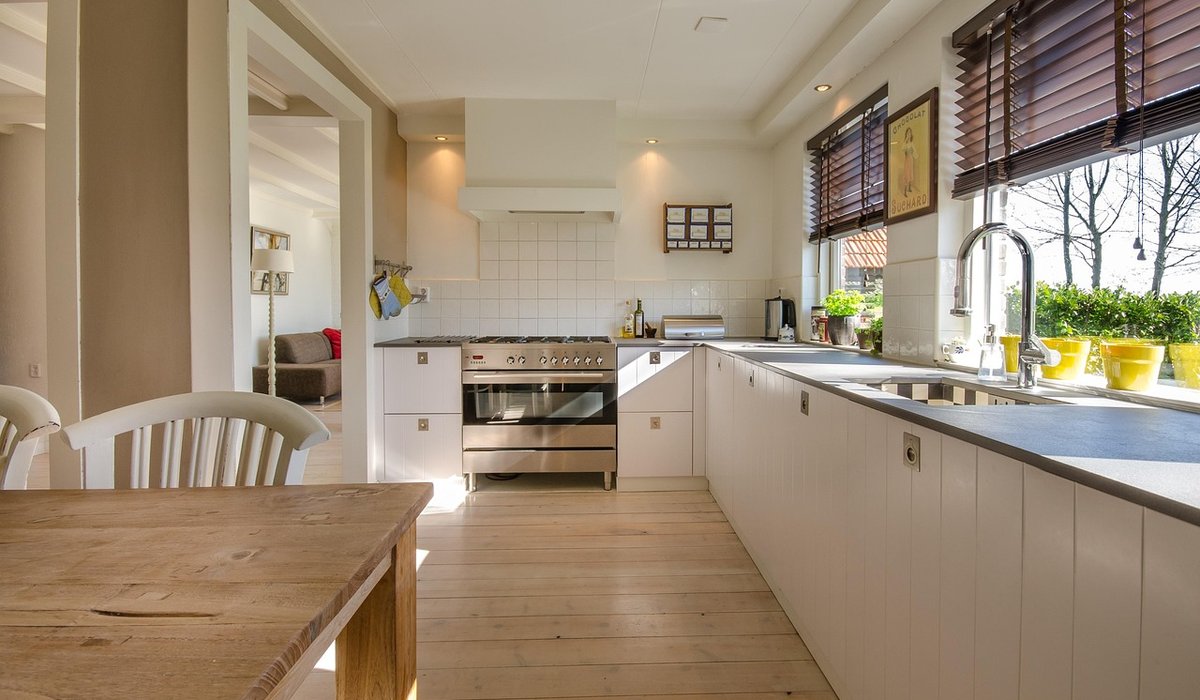
The kitchen is the busiest room in the house, and the easiest to clean naturally. For an everyday all-purpose spray, combine one part white vinegar with one part water in a spray bottle. Add a handful of citrus peels and let it steep for a week before straining — the result smells like sunshine and works beautifully on worktops, splashbacks, cupboard doors and the outside of the fridge.
For a greasy hob or oven door, mix three tablespoons of bicarb with enough water to form a thick paste. Spread it over the mess, leave for ten minutes, then scrub with a damp cloth or a non-scratch pad. A little washing-up liquid can be added for extra degreasing power.
To freshen a smelly sink or drain, pour half a cup of bicarb down the plughole, follow with half a cup of white vinegar, and let it fizz for five minutes. Flush with a kettle of hot water. For the microwave, place a bowl of water with a few lemon slices inside, heat on high for three minutes, then wipe away food splatters with ease.
Bathroom: Banishing Limescale and Grime
Hard water leaves its mark on taps, shower screens and tiles, but vinegar is the antidote. Make a limescale spray by mixing equal parts white vinegar and water. Spray generously, leave for ten minutes, then wipe and buff with a microfibre cloth. For heavy limescale on taps, soak a cloth in neat vinegar and wrap it around the fitting for half an hour.
For toilets, sprinkle half a cup of bicarb around the bowl, add a quarter cup of white vinegar, and leave for twenty minutes before scrubbing with a toilet brush and flushing. The fizzing action lifts stains without bleach. Grout responds well to a paste of bicarb and water worked in with an old toothbrush, while mirrors and taps come up gleaming with a spray of one part vinegar to four parts water, buffed dry with newspaper or a clean cloth.
Living Spaces: Floors, Windows and Fresh Air
For hard floors, add half a cup of white vinegar to five litres of warm water. Mop as usual — the vinegar smell disappears as it dries, taking stale odours with it. Avoid this on natural stone, marble or unsealed wood, which can be damaged by acid.
Windows and glass love a simple mix of one part vinegar to four parts water in a spray bottle, followed by a squeegee or microfibre cloth. For dusting, lightly mist a cloth with the same solution and wipe shelves, skirting boards and blinds.
To freshen the air naturally, simmer citrus peels with a cinnamon stick and a few cloves in a pan of water for twenty minutes. The whole house smells warm and clean. A light mist of diluted vinegar over curtains and sofa cushions (test first) also neutralises lingering cooking and pet odours. For a longer-lasting citrus cleaner, fill a jar with peels, cover with white vinegar, steep for two weeks, strain, then dilute one part infusion to one part water.
Safety, Surfaces and Storage
Natural does not mean risk-free. Never use vinegar on natural stone such as marble, granite or limestone, nor on aluminium or unsealed wood — the acid will etch or discolour the surface. Bicarb is mildly abrasive, so test it on a hidden spot before using it on delicate finishes. Do not mix vinegar and bicarb in a sealed container; the pressure will build up and could cause the lid to pop. Keep essential oils away from pets, especially cats, who cannot metabolise them safely.
Store your homemade cleaners in glass bottles rather than metal, which vinegar can corrode. Label everything clearly, including the date, and keep bottles out of reach of children and pets. Make small batches every few weeks so they stay fresh and effective. With a little practice, you will wonder why you ever relied on shop-bought chemicals — your home will smell cleaner, your surfaces will shine, and you will have a simple, sustainable routine that feels good in every sense.


Home
-
Sow quick-growing lettuce, rocket and spinach in shallow trays for fresh cut-and-come-again leaves just steps from the sink.


Kitchen




-

Long established fact that a reader will be distracted
-

Long established fact that a reader will be distracted
-

Long established fact that a reader will be distracted




Garden
Karla Gleichauf
12 May 2017 at 05:28 pm
On the other hand, we denounce with righteous indignation and dislike men who are so beguiled and demoralized by the charms of pleasure of the moment
M Shyamalan
12 May 2017 at 05:28 pm
On the other hand, we denounce with righteous indignation and dislike men who are so beguiled and demoralized by the charms of pleasure of the moment
Liz Montano
12 May 2017 at 05:28 pm
On the other hand, we denounce with righteous indignation and dislike men who are so beguiled and demoralized by the charms of pleasure of the moment